The storybook
Twenty-one painted scenes follow Tassel through a misty cloud forest, where a young bird comes to his perch to learn the song. How far can one song fly? For curious explorers, ages 4-8.
Find it on AmazonTassel is a three-wattled bellbird. He lives in the cloud forests, where the mist rolls up the mountain every morning.
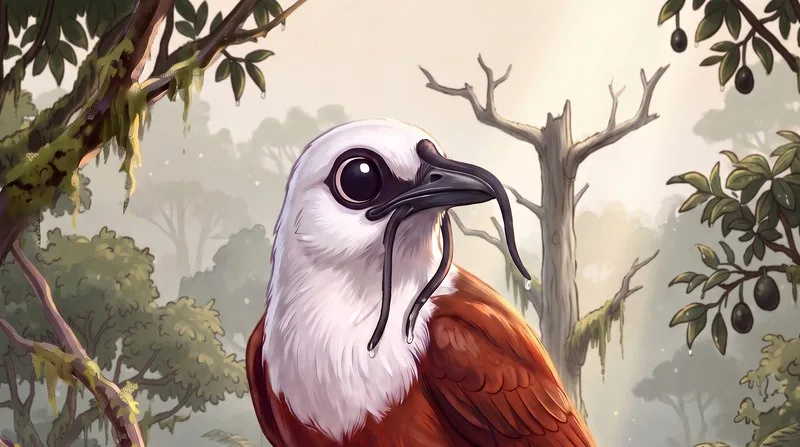
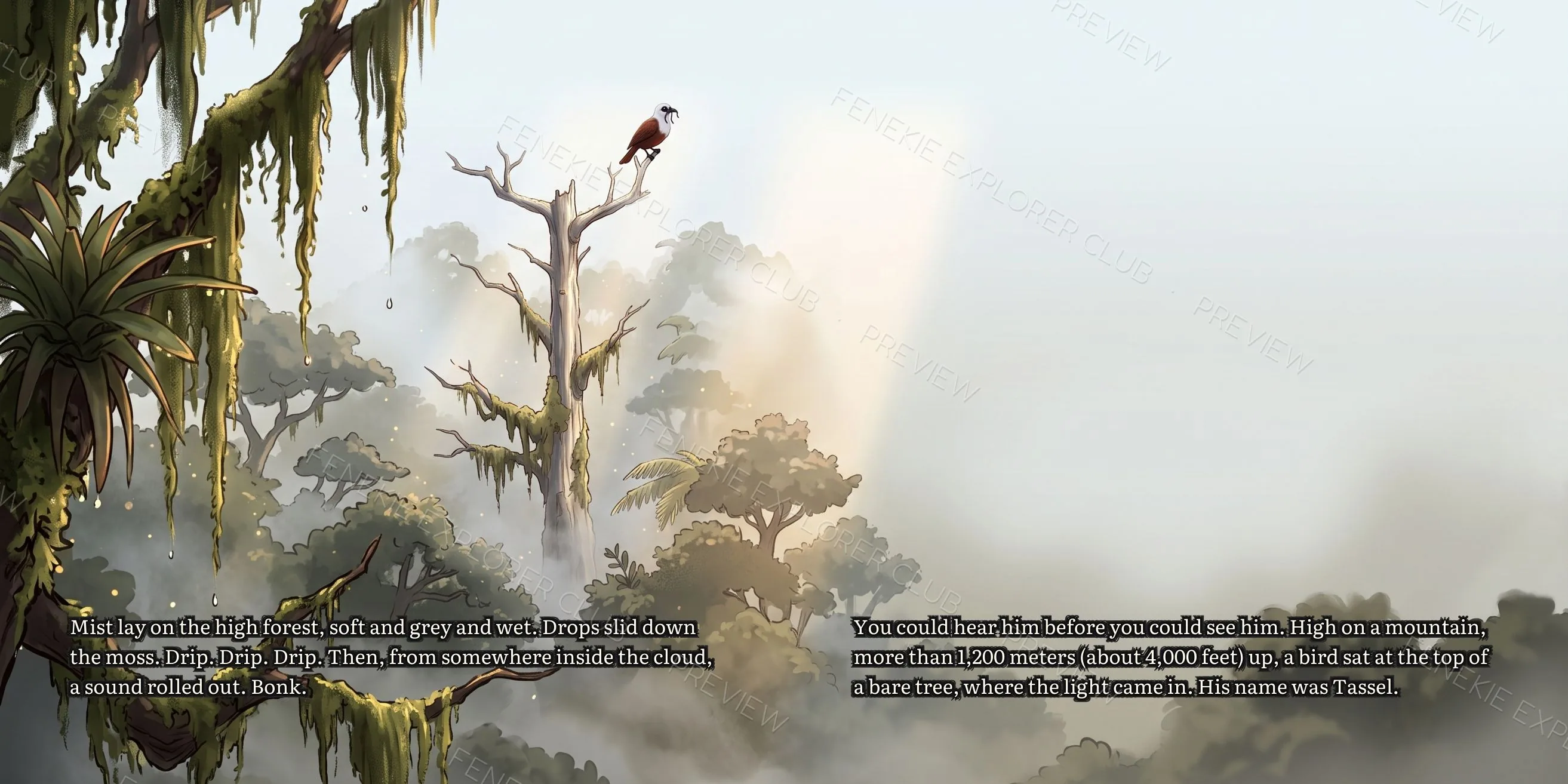
Tassel sings from the top of a bare tree, with the mist rolling past. He throws his head back, opens his beak, and his call rolls out over the valley.
His kind, the three-wattled bellbird, is listed Vulnerable by the IUCN. Young trees climb the slope below him, growing a little taller in the morning light.
Tassel sings from the top of a bare tree, with the mist rolling past. He opens his beak wide and BONK, and the call carries about half a mile through the forest. A young bird comes to his perch to learn the song. The tune has been changing for decades.
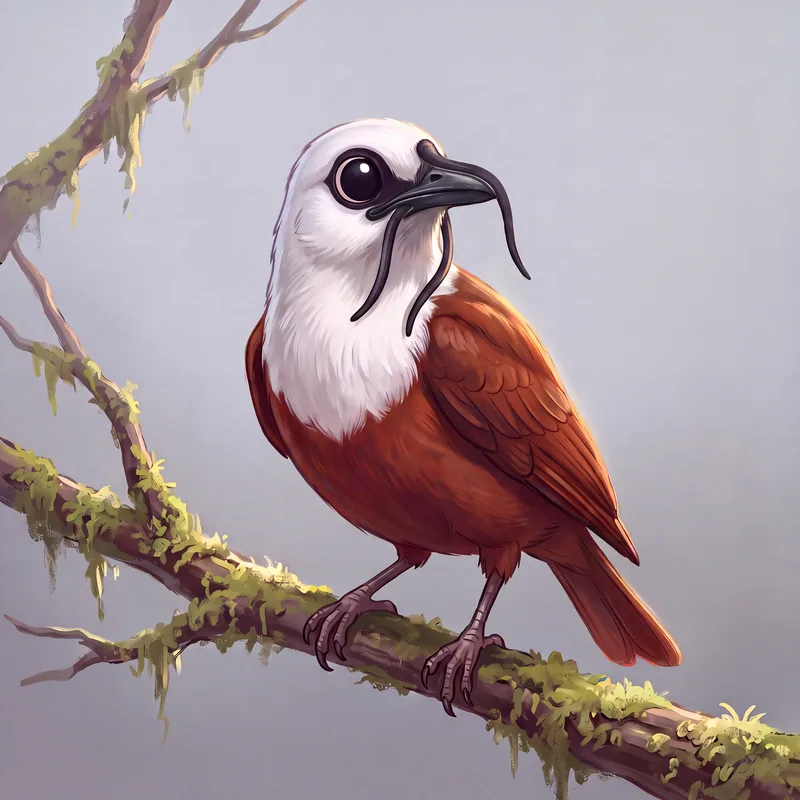
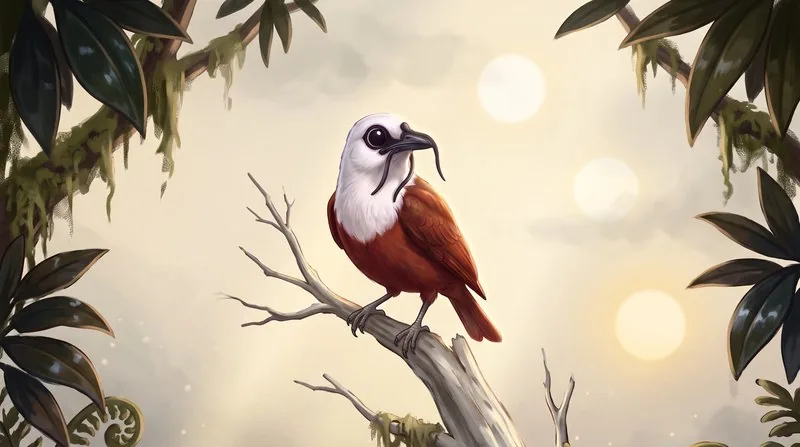
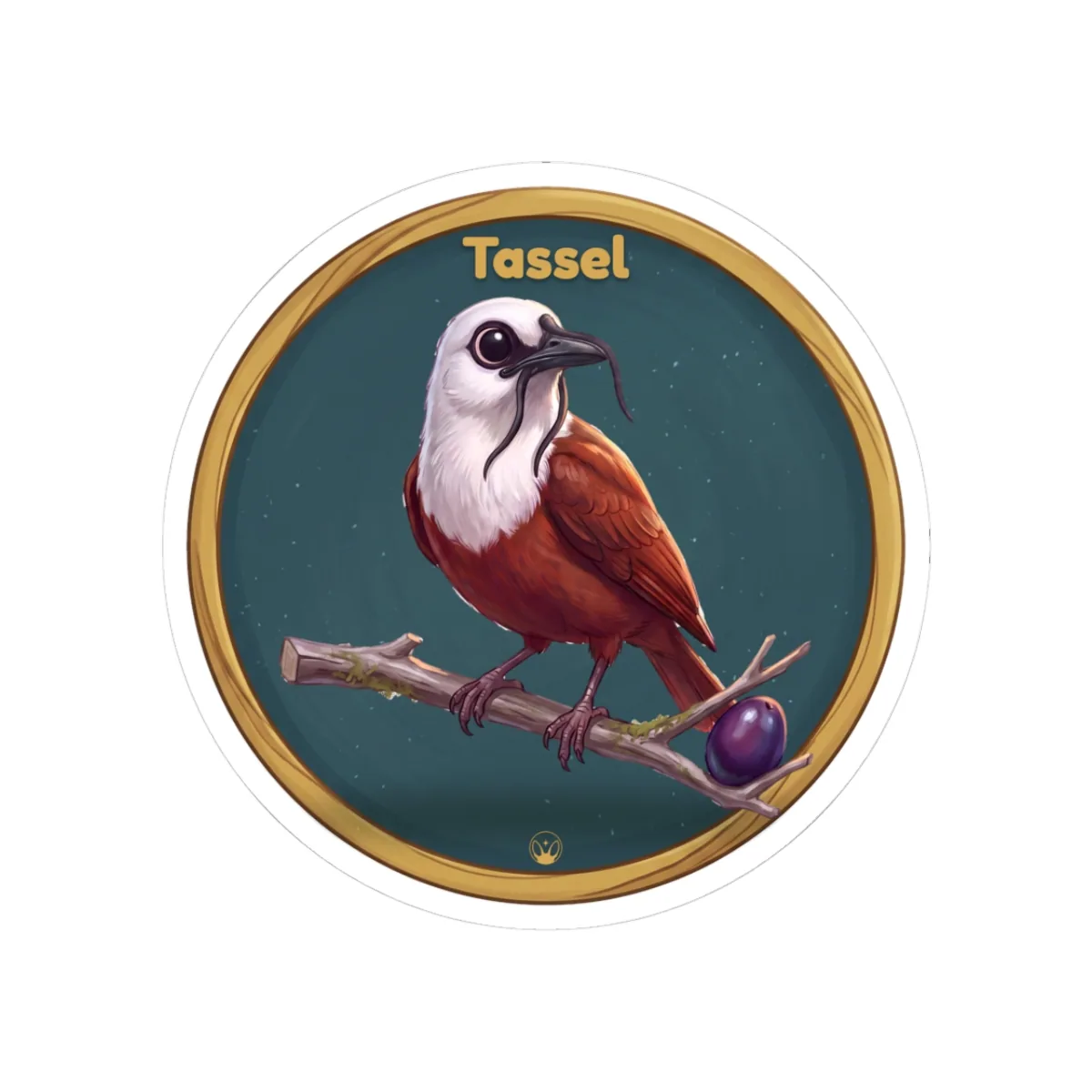
Tassel is a three-wattled bellbird. He lives in the cloud forests and lowland forests from Honduras to Panama. He is about as long as a school ruler, 25 to 30 centimeters (10 to 12 inches). His head and neck are snow white, and his body is chestnut red. Three soft black wattles, each about 5 to 8 centimeters (2 to 3 inches) long, hang from his bill. Females are olive green and have no wattles. Males take several years to grow their full adult colors.
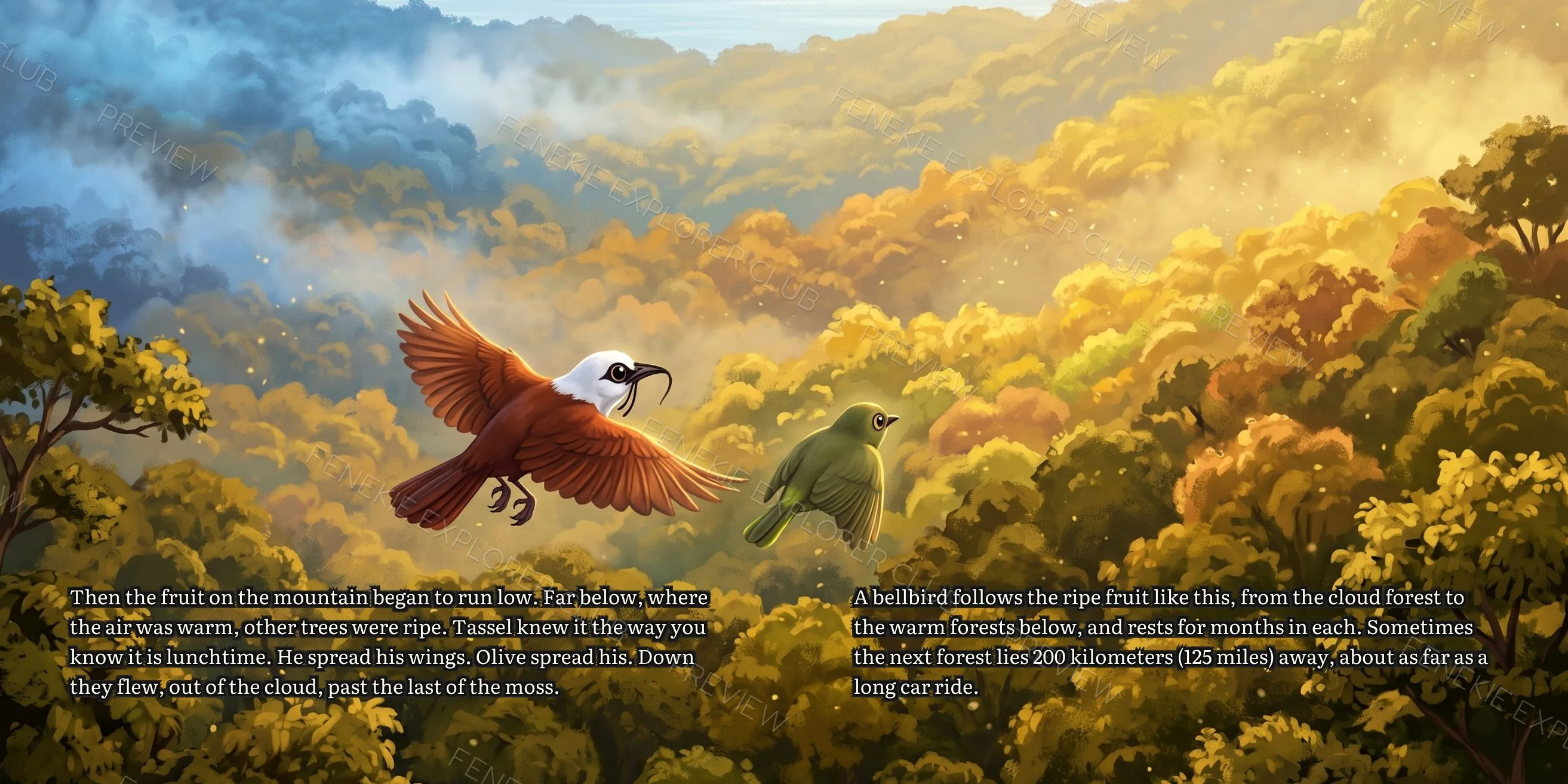
The power is the bonk. Males sing from high, bare perches at the edge of a forest gap, for up to 80 percent of the day in breeding season. A young male learns his song from older males. Males visit each other's perches and adjust their songs, so the whole song slowly changes. Outside breeding season he travels between cloud forest and lowlands on both coasts, eating wild avocado fruit. His cousin, the white bellbird, holds the record for the loudest bird. Some experts call Tassel one of the loudest birds too.
A free mystery hunt about the three-wattled bellbird, to print at home. Mariana and Fenekie are still hiding the clues. Strike's Explorer's Hunt is ready now.
Rather just listen? Both are podcasts too: Explorer Club on Spotify, Bedtime Stories on Spotify, or any other podcast app.
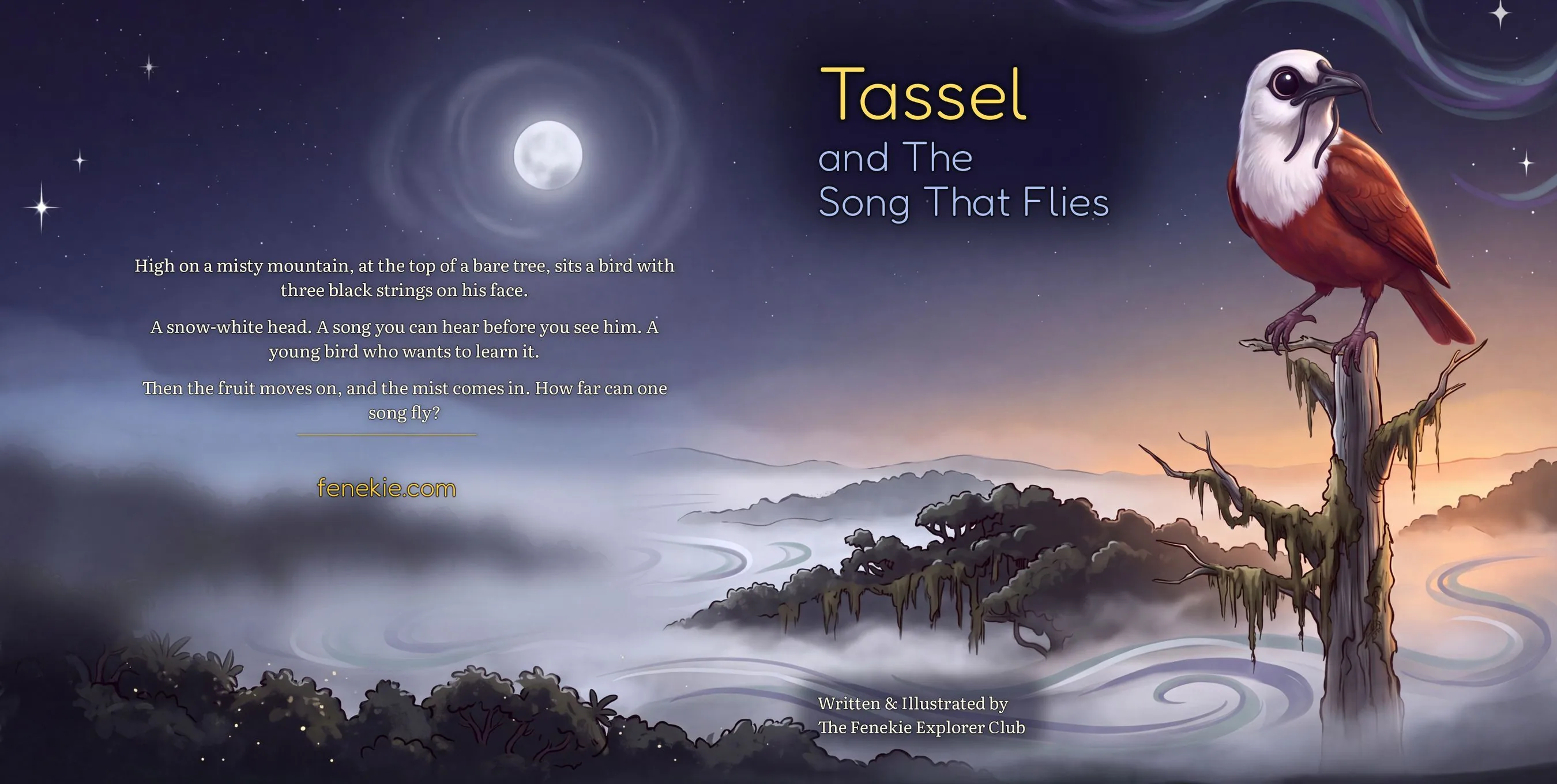
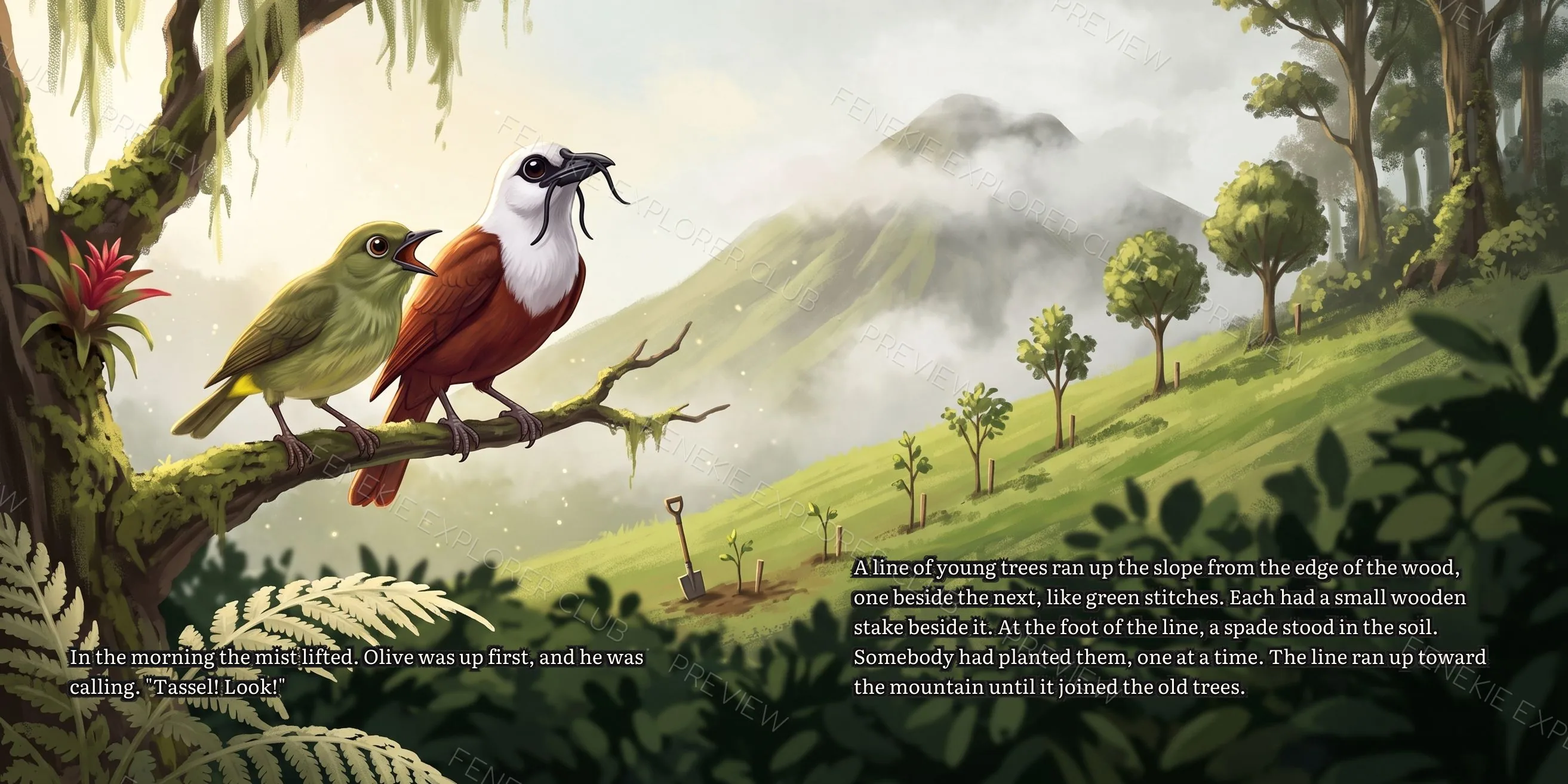
Twenty-one painted scenes follow Tassel through a misty cloud forest, where a young bird comes to his perch to learn the song. How far can one song fly? For curious explorers, ages 4-8.
Find it on AmazonHis harsh bonk carries about half a mile (0.8 km) through the forest.
A young male learns his song from older males. Scientists long thought birds in his group were born knowing their songs.
Over 37 years, the main whistle in the Monteverde song dropped from about 5,575 to about 3,129 hertz (a measure of how high a sound is).
He swallows wild avocado-family fruit whole and spits the seed out under his singing perch. Seedlings that grew there survived better.
Tassel's kind, the three-wattled bellbird, is listed Vulnerable by the IUCN, the group that tracks how animals are doing worldwide. It was last checked in 2021, and it has been Vulnerable at every review since 1994. Its population is falling. In the lowlands he uses outside breeding season, big laurel-family trees, a main source of his fruit, are cut for firewood, cattle ranching and farms. The Bellbird Biological Corridor links his cloud forest with the mangroves of the Gulf of Nicoya, and people plant trees along it. 1% of all Fenekie Explorer Club sales supports wildlife conservation.