Moonbeam the Cedar Kite

Moonbeam is a Japanese dwarf flying squirrel. She lives in the mountain forests of Japan, and nowhere else on Earth. She wakes shortly after sunset.

The sky cape

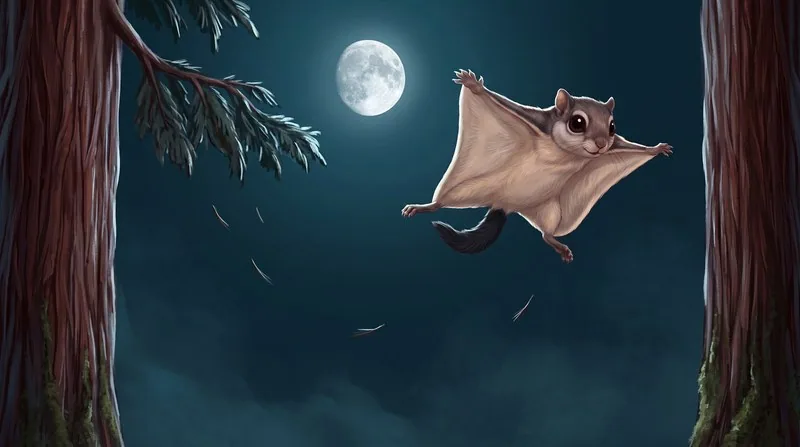
Moonbeam does not fly. She leaps from a cedar, spreads her legs wide, and a furry cape of skin between them catches the night air.

A home in old trees

Her kind is listed Least Concern by the IUCN. She cannot make her own home, so she needs old trees with hollows already in them.

Week 24 · Japanese Dwarf Flying Squirrel

Japanese Dwarf Flying Squirrel: Moonbeam the Cedar Kite

Pteromys momonga
SKY CAPE

Moonbeam does not fly. She leaps from a cedar, spreads her legs wide, and a furry cape of skin between them catches the night air. It carries her to the next tall tree. She is about as long as a grown-up's hand, and she lives in Japan and nowhere else on Earth.

Moonbeam the Cedar Kite
The superpower

A furry cape that catches the night air

Japanese Dwarf Flying Squirrel scene

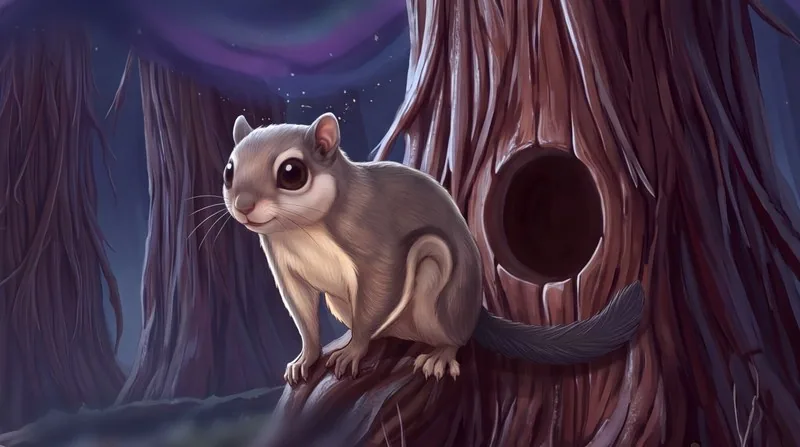
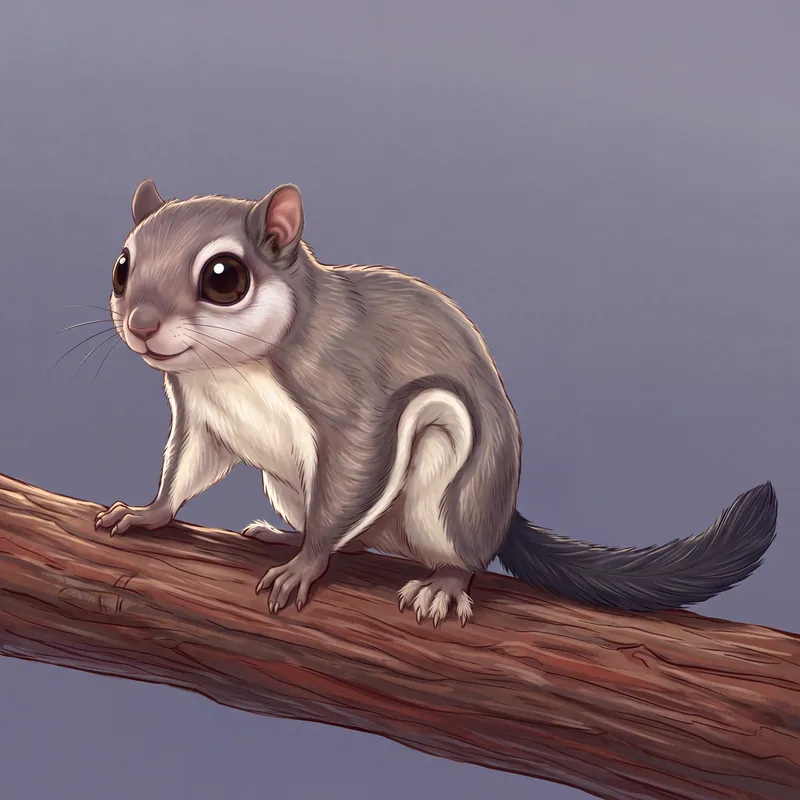
Moonbeam is a Japanese dwarf flying squirrel. She lives in the mountain forests of Honshu, Shikoku and Kyushu, in Japan, and nowhere else on Earth. Her head and body are 14 to 20 centimeters (5.5 to 8 inches) long, about as long as a grown-up's hand. She weighs about 100 to 170 grams (3.5 to 6 ounces), about as much as a small apple. Her coat is smoky grey-brown with a white belly. Her eyes are very big and round, made for the dark. Her tail is flat and furry, about two-thirds as long as her body.

The power is the cape. A fold of furry skin runs along each side of her body, from wrist to ankle. When she leaps and spreads her legs, the skin catches the air, and she glides from tree to tree. She wakes shortly after sunset and rests in a tree hollow by day. Her bed is often cedar bark, split into fine strips. She eats buds, leaves, seeds and cones, and from winter to early spring her droppings show she eats cedar pollen. She does not sleep through winter. She keeps coming out into the cold night.

About as long as a grown-up's hand, and about as heavy as a small apple. She does not sleep through the winter.
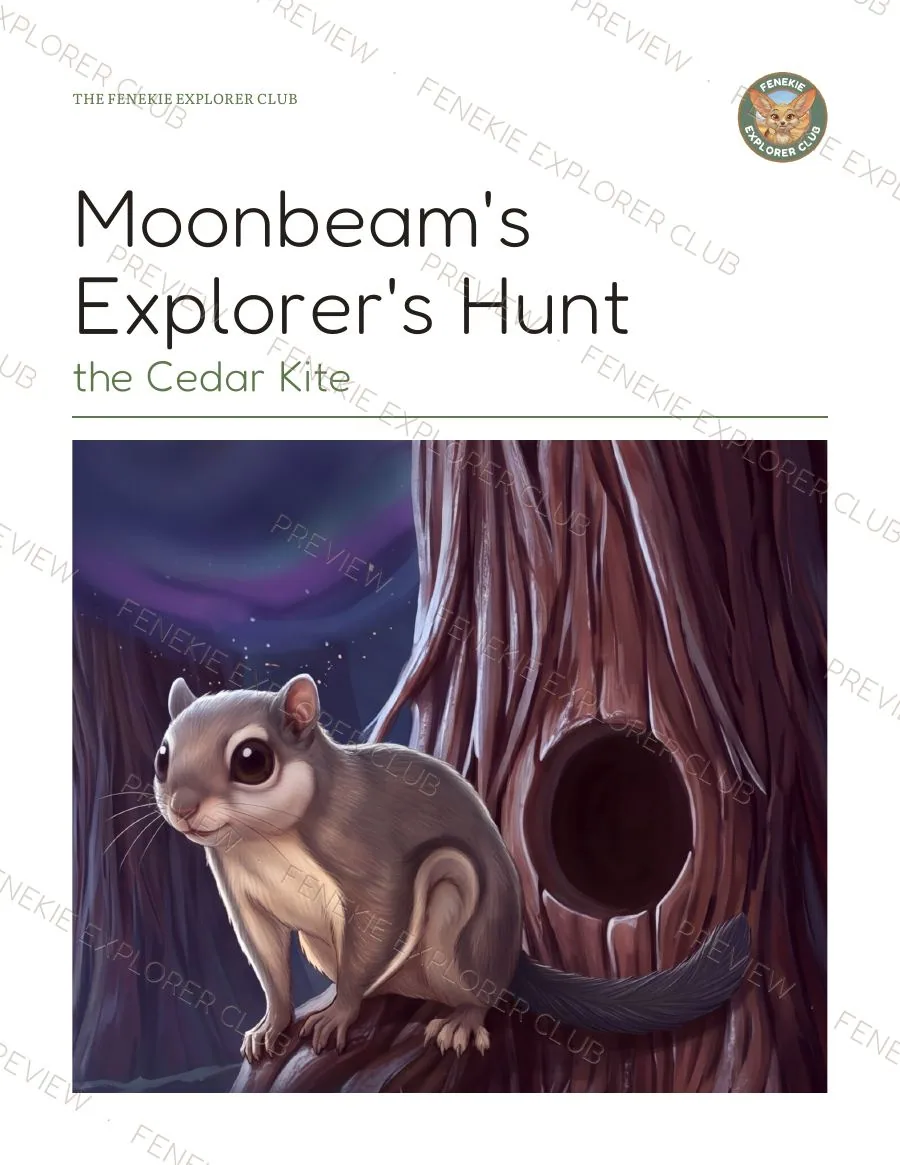
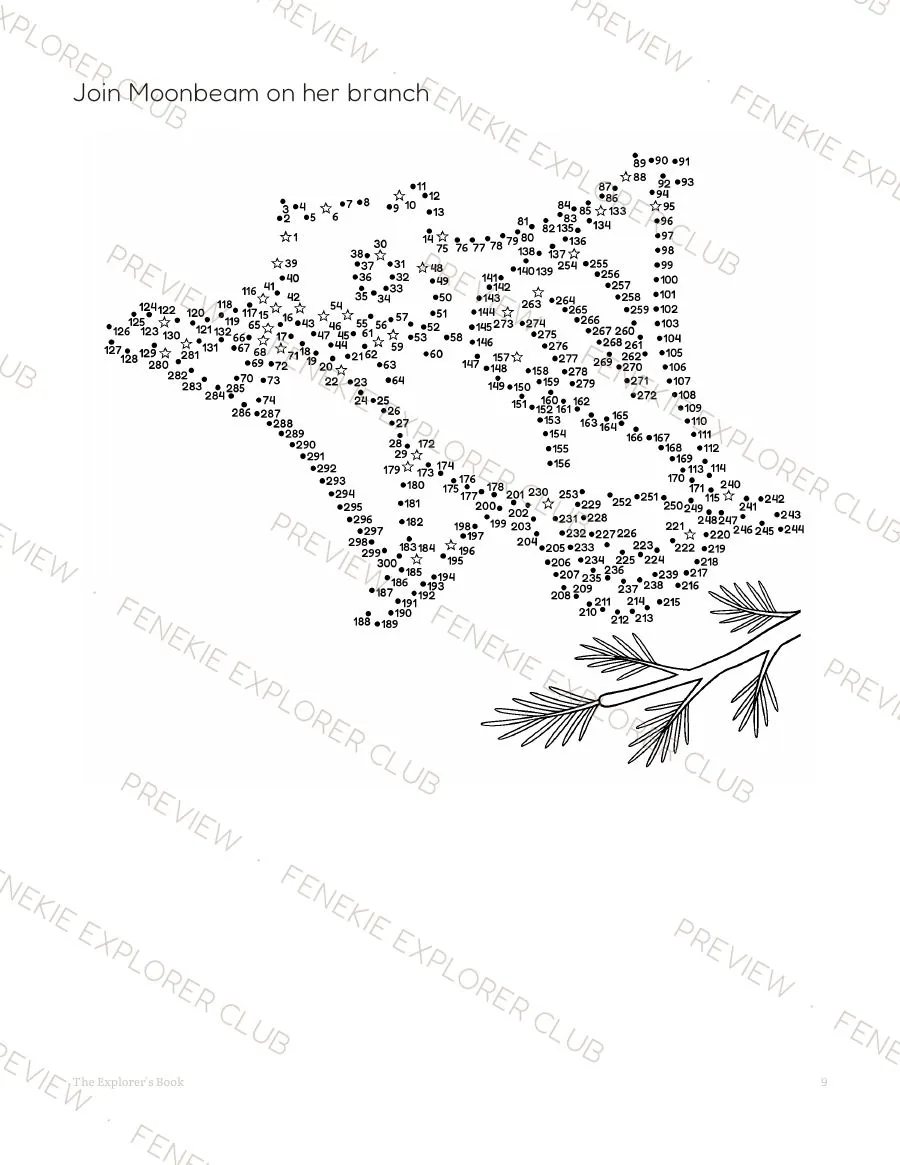
  • Page 1 of Moonbeam's Explorer's Hunt, preview
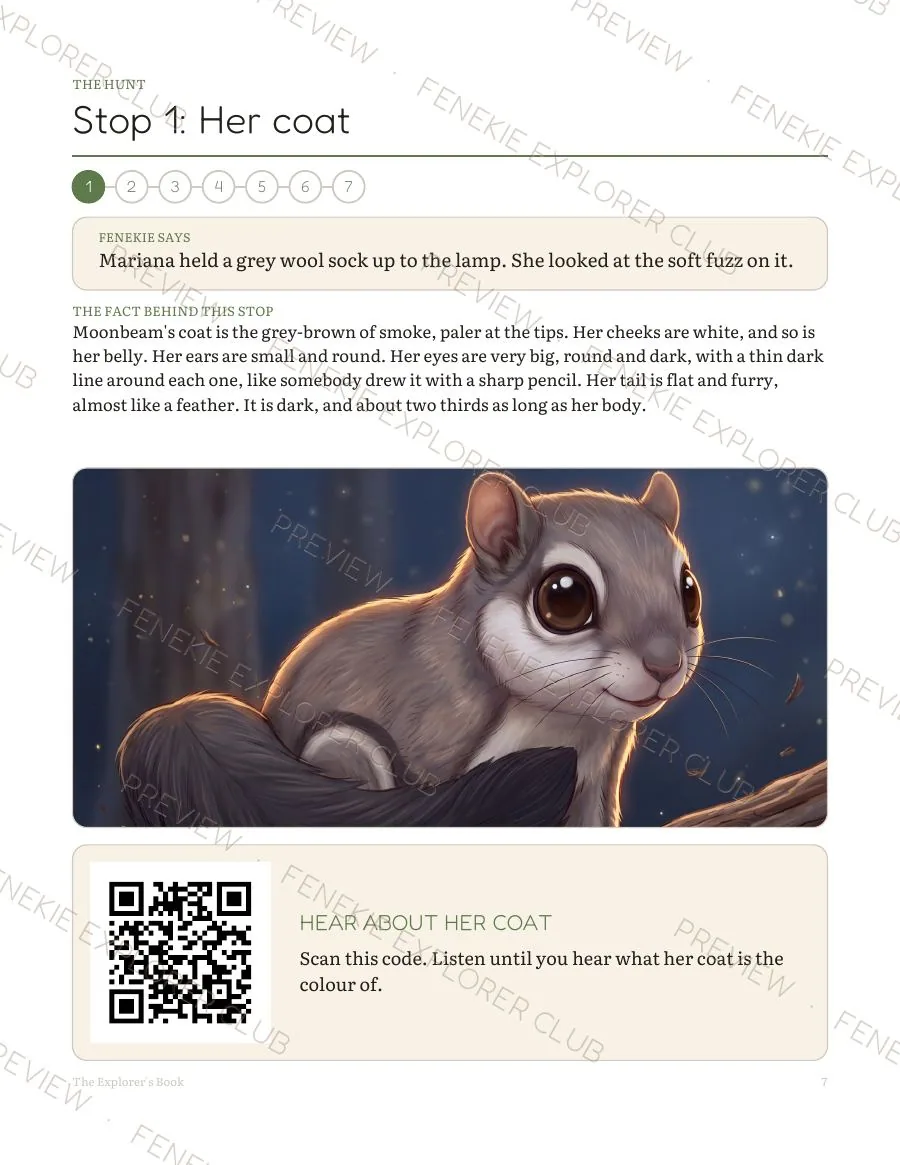
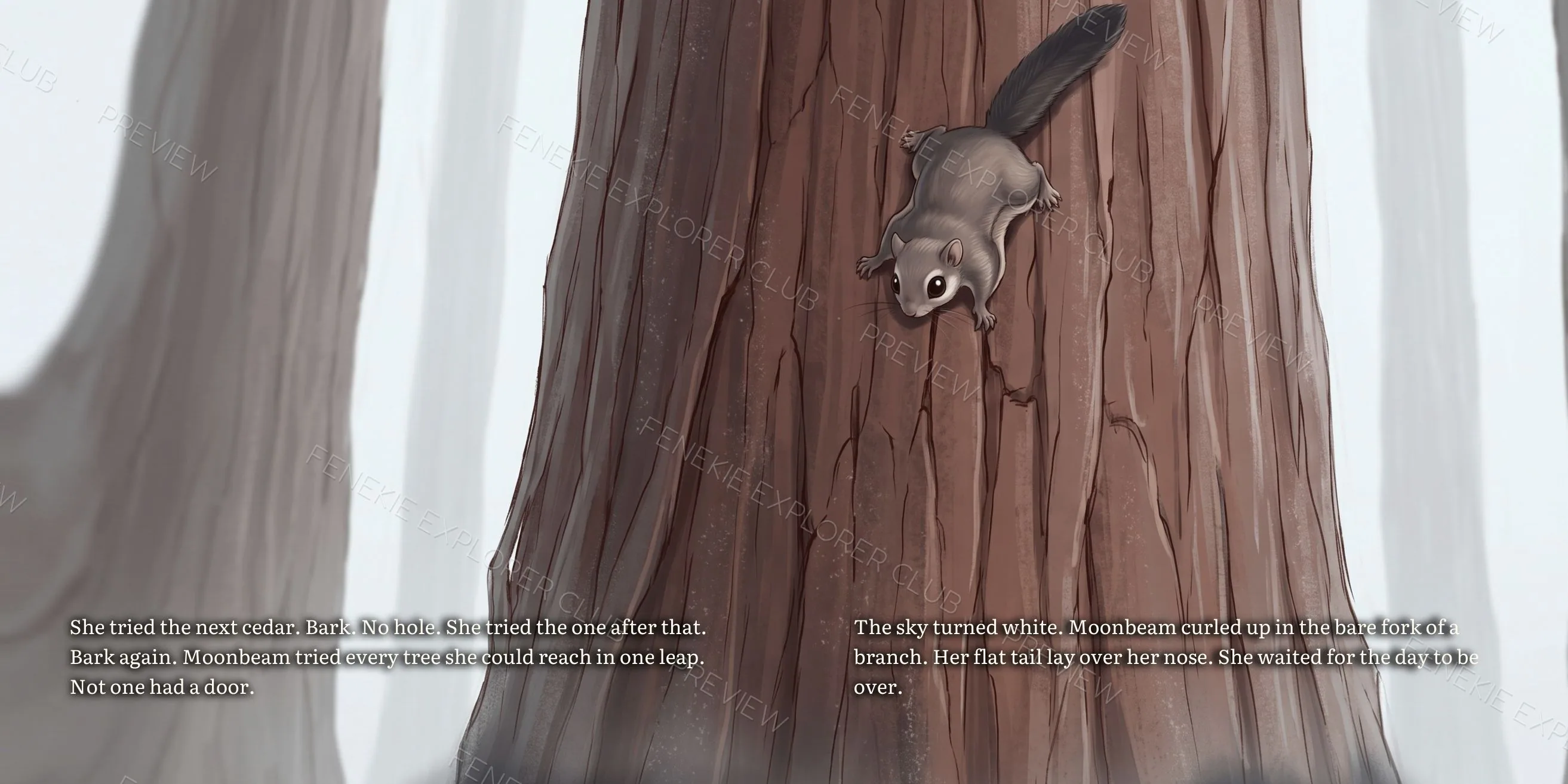
  • Page 7 of Moonbeam's Explorer's Hunt, preview
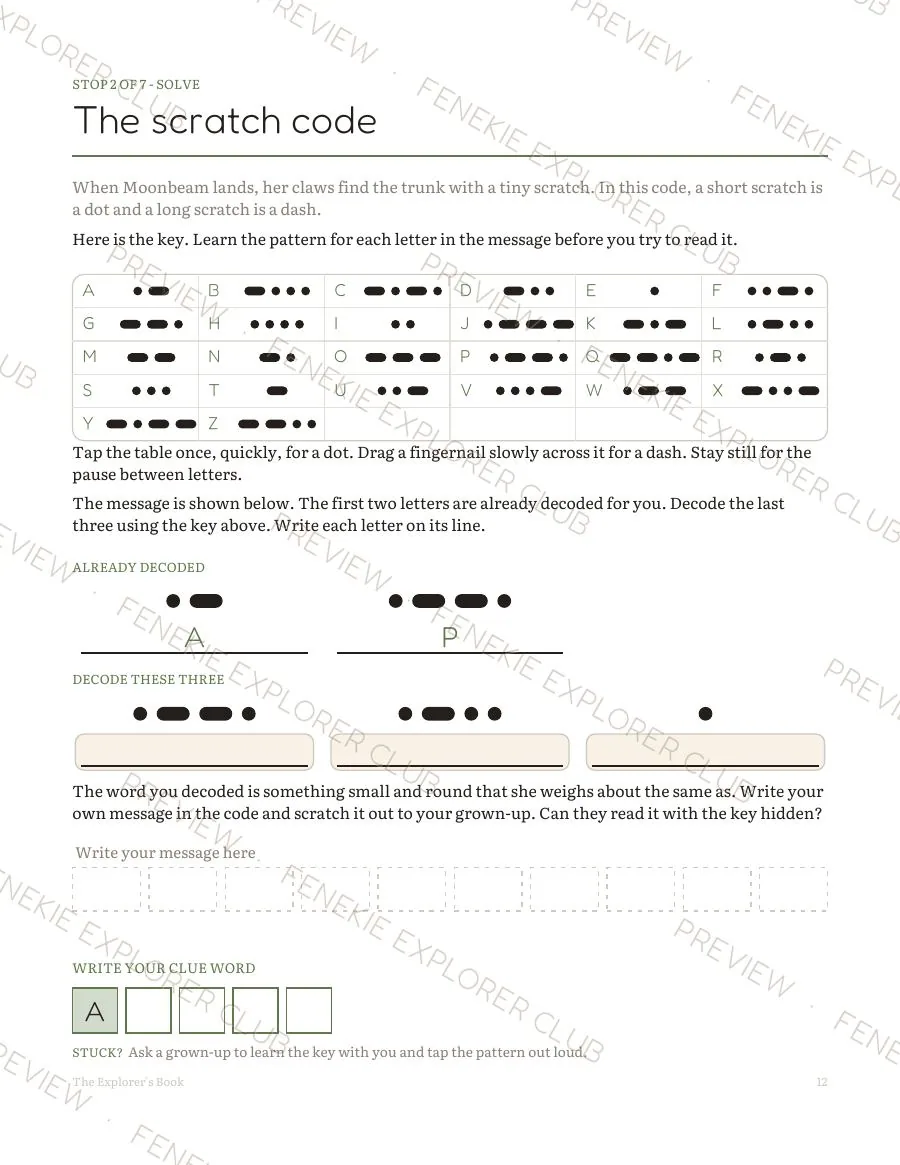
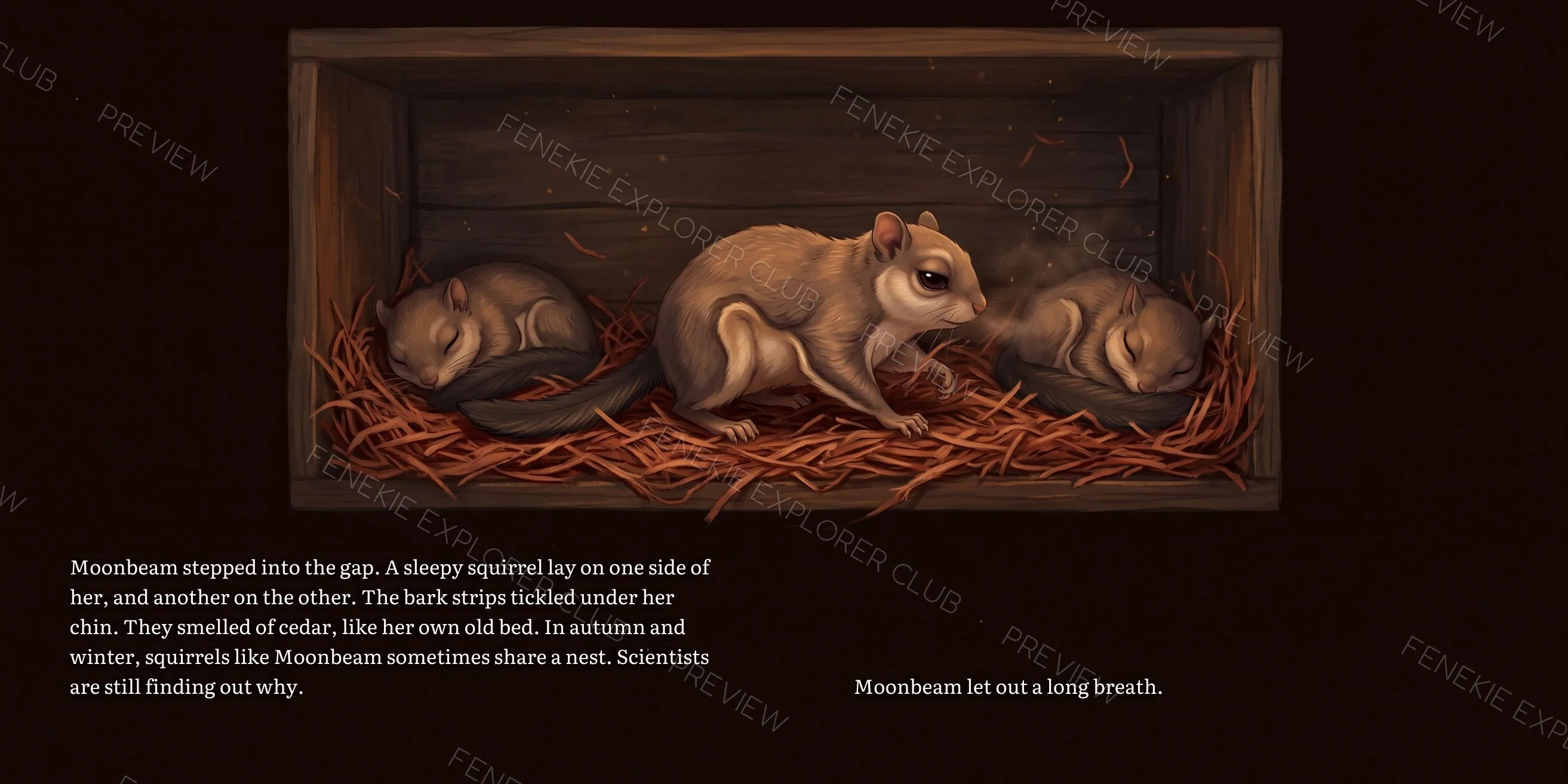
  • Page 12 of Moonbeam's Explorer's Hunt, preview
  • Page 9 of Moonbeam's Explorer's Hunt, preview

4 of 43 pages, a peek inside

Free for grown-ups

Moonbeam's Explorer's Hunt

A mystery hunt about the momonga. Mariana and Fenekie have hidden the clues, and your young explorer gets to find them. Leave your email and we will send the book to print at home.

No spam. Every mail has an unsubscribe link.

Watch & listen

Two ways to meet Moonbeam

Podcast A · Discovery

Meet Moonbeam, the Cedar Kite

A daytime conversation. Meet the animal, and the one thing that makes it a superhero.

Podcast B · Bedtime

Moonbeam and the Round Door

A gentle narrated story to drift off to. It ends with lights out.

Rather just listen? Both are podcasts too: Explorer Club on Spotify, Bedtime Stories on Spotify, or any other podcast app.

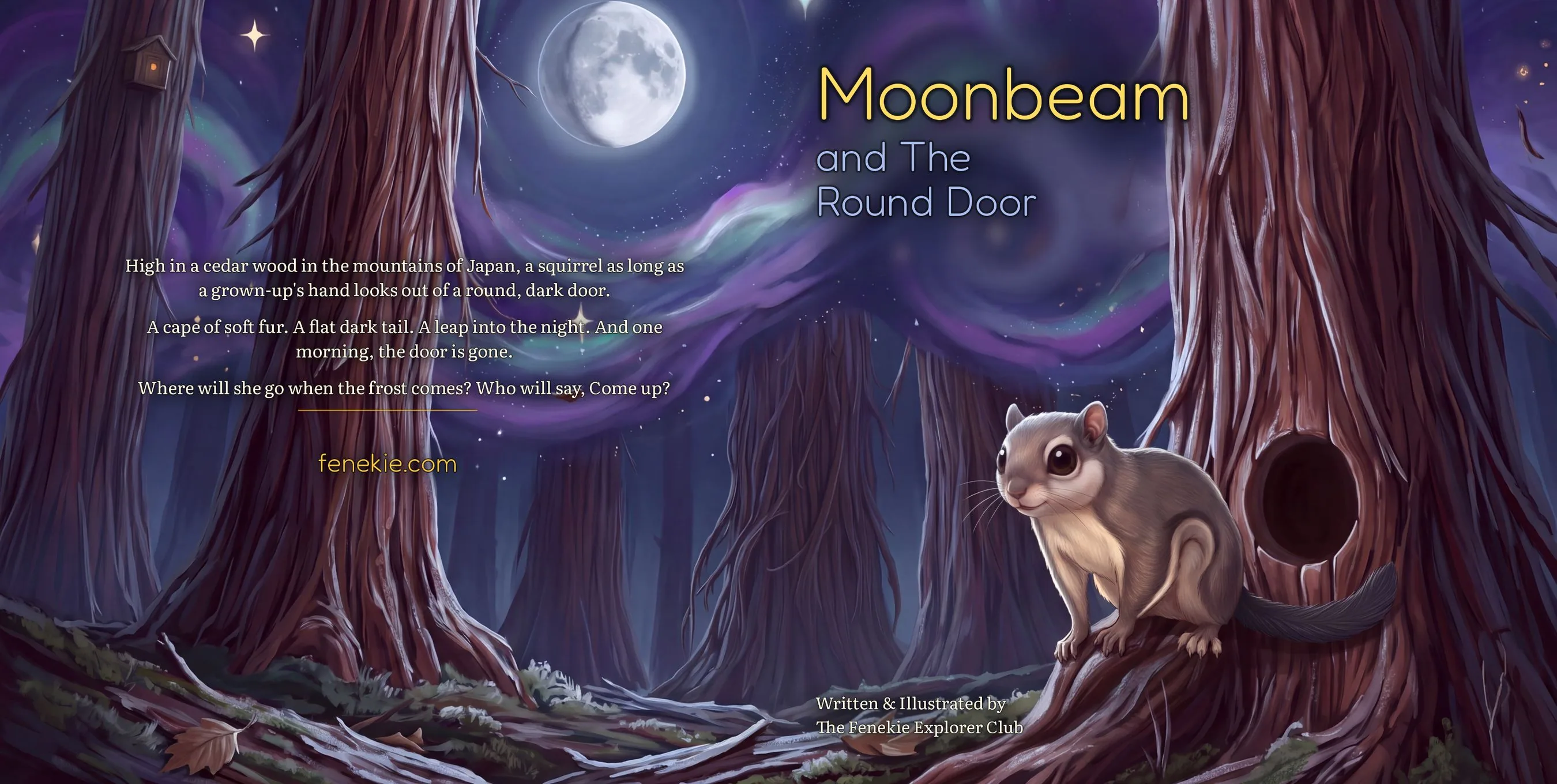
  • The Moonbeam the Cedar Kite storybook cover, laid flat
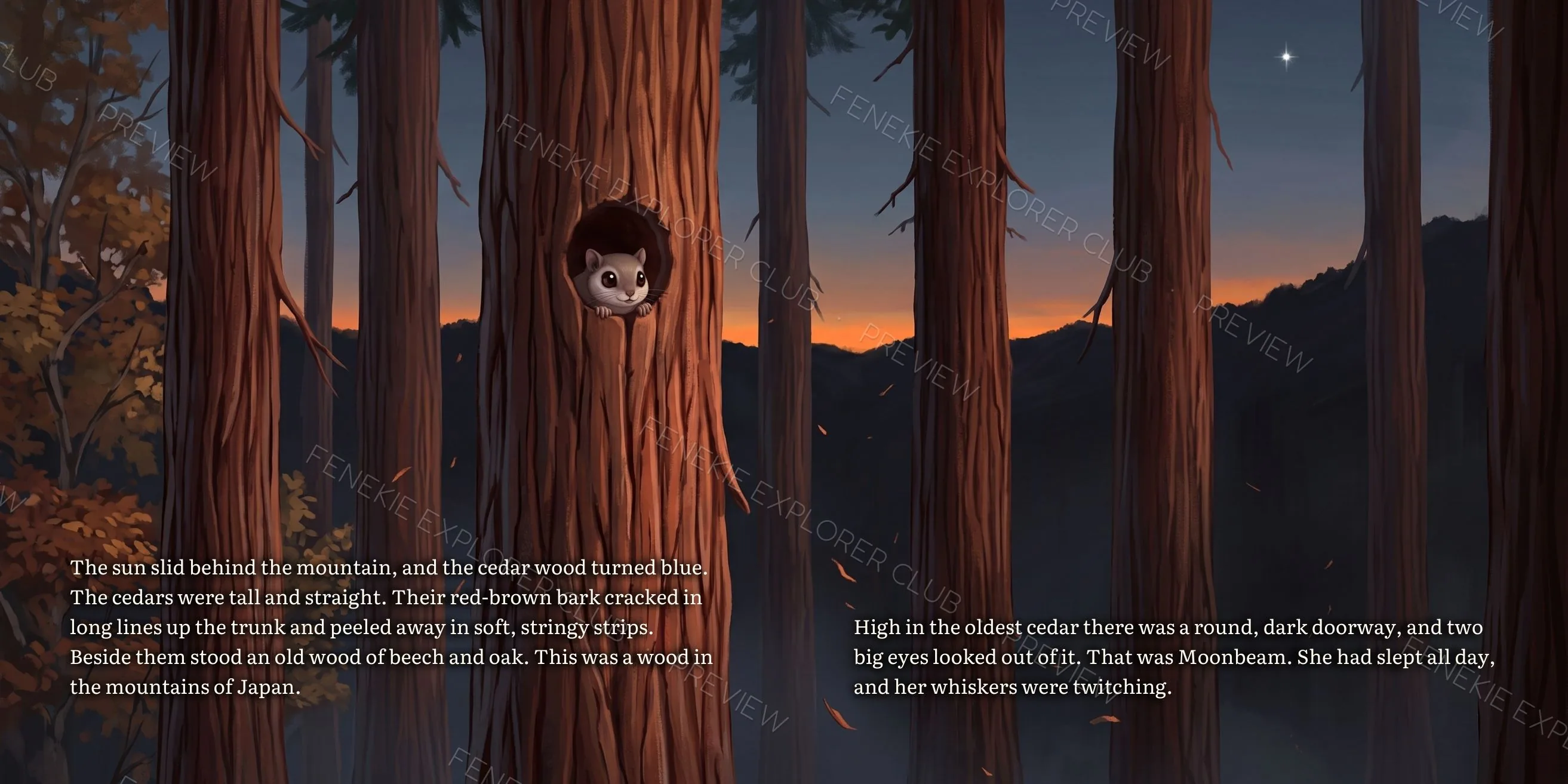
  • A spread from inside the Moonbeam the Cedar Kite storybook, preview 1
  • A spread from inside the Moonbeam the Cedar Kite storybook, preview 2
  • A spread from inside the Moonbeam the Cedar Kite storybook, preview 3

The storybook

Twenty-one painted scenes follow Moonbeam through a cedar wood in the mountains of Japan. A squirrel as long as a grown-up's hand looks out of a round, dark door. A cape of soft fur. A flat dark tail. A leap into the night. And one morning, the door is gone. Where will she go when the frost comes? For curious explorers, ages 4-8.

Find it on Amazon
Take one home

Moonbeam's keepsakes are on their way

We are still painting Moonbeam the Cedar Kite's stickers, shirts and prints. The rest of the club is already in the shop.

Wonder facts

Things you wouldn't believe are true

1

Her close cousin, the Ezo flying squirrel of Hokkaido, was measured in one study gliding as far as 49 meters (162 feet). Nobody has measured how far Moonbeam's own kind can glide.

2

She does not sleep through winter. She keeps coming out at night in the cold, and sometimes several squirrels share one nest. Scientists are still finding out why. Keeping warm is one idea, and so far the studies do not agree.

3

Her bed is often cedar bark, split into fine strips. She cannot dig or carve her own home, so she needs a hollow that is already there, in an old tree.

4

In its first days, a newborn weighs only about 5 to 7 grams (0.2 to 0.25 ounces). That is about the weight of one or two coins.

LC
Least Concern
IUCN Red List, 2016
Verified at iucnredlist.org

Least Concern since 2008, she needs old hollow trees

Moonbeam's kind is listed Least Concern by the IUCN, the group that tracks how animals are doing worldwide. It was last checked in 2016, and it has been Least Concern at every review since 2008. That means it is not on the danger list for the whole world. Nobody has counted well enough to know if there are more or fewer each year. In many parts of Japan, people worry about it. She needs old hollow trees, and she cannot make one herself. Where big areas of forest are cleared, her home can go too, and thinning often takes the hollow trees away. In Tottori, people hung nest boxes at three heights. The squirrels used the box 6 meters (20 feet) up almost every time. In Kumamoto, ten nest boxes and three cameras gave the first sure record of the squirrel in one northern area. We can love the old trees she sleeps in, and the boxes careful hands hang for her. 1% of all Fenekie Explorer Club sales supports wildlife conservation.

Japanese Dwarf Flying Squirrel facts

  • What it isThe Japanese dwarf flying squirrel is a small rodent in the squirrel family that lives in trees. It does not fly. It glides on a furry fold of skin stretched between its wrists and ankles.
  • Say itIts scientific name, Pteromys momonga, is TERR-oh-miss moh-MOHN-gah. In Japan it is called momonga, said moh-MOHN-gah.
  • SizeIts head and body are 14 to 20 cm (5.5 to 7.9 in) long, with a tail 9.5 to 14 cm (3.7 to 5.5 in) long. It weighs about 100 to 170 g (3.5 to 6 oz), about as heavy as a small apple.
  • Where it livesIt lives only in Japan, on the islands of Honshu, Shikoku and Kyushu, and not on Hokkaido. It lives in mountain forests, and in planted cedar and cypress forests beside natural woods.
  • What it eatsIt eats leaves, buds, bark, seeds, cones and fruit. From winter to early spring, its droppings show it eats cedar pollen.
  • Day or nightIt is awake at night and starts shortly after sunset. By day it rests in a tree hollow it cannot dig itself, on a bed that is often cedar bark split into fine strips. It does not hibernate. In winter several squirrels sometimes share a nest, and studies do not agree on why.
  • BabiesIt has babies in two seasons, spring and summer. A spring litter is 1 to 5 young and a summer litter is 3 to 8. A newborn weighs only about 5 to 7 g (0.2 oz), about the weight of one or two coins.
  • Who hunts itOwls are thought to hunt it, and perhaps snakes. We found no study that says for sure what hunts it.
  • Where it came fromIt is a rodent. The sugar glider looks like a cousin, but it is a pouch animal from Australia and not a relative.